How to Read Small Data Matrix Codes: UDI & Electronics Traceability Guide
Medical device UDI codes, electronics component traceability, PCB process marks — more industries are choosing Data Matrix (DM codes). It packs huge amounts of data into tiny areas with built-in error correction — but the trade-off is that reading equipment requirements are demanding. This guide covers the challenges, precision requirements, and how to choose the right module.
1. Why medical & electronics use Data Matrix
- High data density — 10~50× the data of a QR Code in the same area, ideal for small parts
- Tiny footprint — as small as 1~2mm square, fits components, test tubes, surgical instruments
- Strong error correction — Reed-Solomon correction reads through partial damage and dirt
- Regulatory requirements — EU MDR, US FDA UDI, China's Unique Device Identification rules specify/recommend Data Matrix
Typical applications: medical device UDI labels, IVD reagent tubes, electronic components (capacitors, chips, modules), PCB boards, automotive parts traceability.
2. Four challenges of reading DM codes
1. Very small codes (high density)
DM codes on components may be only 2~5mm with 0.2~0.5mm cells — requiring ≥3.3mil high-precision reading. A typical 5mil module may fail.
2. Low contrast (metal/plastic marking)
Laser marking on metal or dark plastic can yield only 20%~30% contrast vs. the background — far below paper labels. Decode algorithm adaptability to low contrast is the key differentiator.
3. Non-flat surfaces (curved/rounded parts)
Codes on test tubes and rounded components are distorted; the decoder must handle geometric distortion well.
4. Demanding illumination
Metal surfaces reflect; curved surfaces scatter. Choose the right lighting (coaxial / low-angle) — fixed-installation scenarios need careful illumination design.
3. Precision requirements & module selection
Read the precision spec first
| Reading precision | DM cell size readable | Typical scenario |
|---|---|---|
| ≥3.3 mil | ~0.084mm cells (high-density small codes) | Electronics components, PCB, precision medical parts |
| ≥5 mil | ~0.127mm cells | Standard UDI labels, reagent tubes |
| ≥7.5~10 mil | ~0.19~0.25mm cells | Medicine boxes, instruction sheets, general labels |
⚠️ Spec-sheet precision is usually the "best case" under ideal conditions. For real selection, leave ≥30% margin (e.g. target 5mil → choose a 3.3mil module).
Xinlong Data Matrix reading solutions
🧬 High-density small codes / Electronics manufacturing
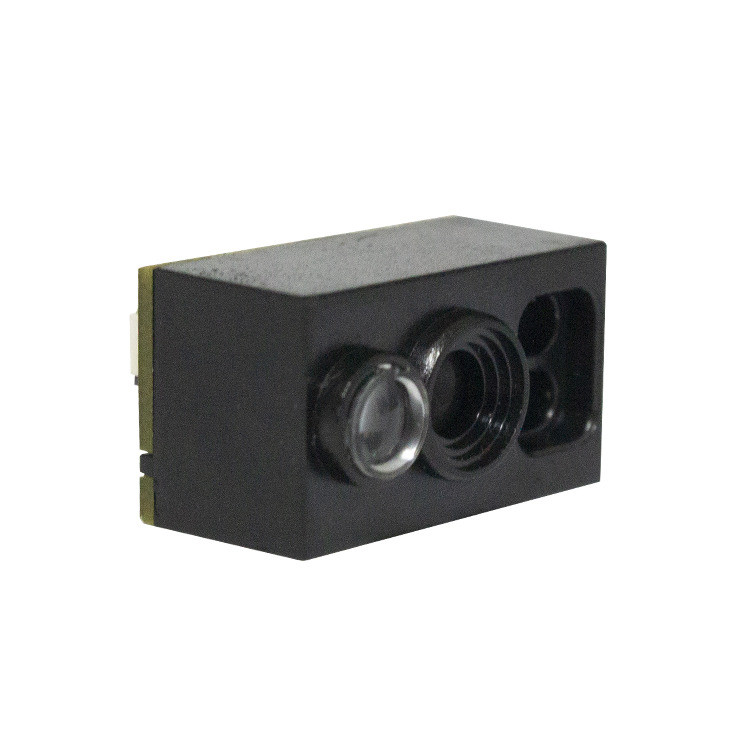
XL-F3-BW — 1280×960 high-resolution sensor, ≥3.3mil precision (Code 128), ultra-compact 36×14×11.3mm at just 5g; fits inspection equipment and AOI stations; ImageTool debug support for on-site tuning.
🏥 Medical device UDI / Medical terminals
F4100 — 800×600 CMOS, Data Matrix and full symbology support, 1D ≥3.3mil / 2D ≥5mil, 30g light design for medical terminals, dispensing machines and lab equipment.
🧪 Reagent tubes / Sample traceability
XL-F25 — 640×480 CMOS, handles curved and low-contrast scenarios, customizable wide voltage — suits lab automation equipment.
Selection checklist
- Determine your target DM cell size (ask your printing/marking supplier for specs)
- Confirm module precision ≤ 70% of the target cell size
- Confirm full Data Matrix version support (ECC200 required)
- Confirm illumination plan: coaxial/polarized light for metal marking
- Test with 50~100 real samples (including rejects) and measure read rate
4. FAQ
Related Products

Related Articles
Struggling with DM small-code reads?
Send us your code samples (or photos) — free read-rate testing + module recommendation.
📞 Contact Xinlong IoT