Barcode Technology in Manufacturing Traceability: Full-Process Error-Proofing from Work Order to Finished Product
A customer complains that a product's batch is wrong, and you need to answer within minutes: which lot of materials went into this shipment, which stations it passed, who worked on it and at which workstation. Factories without line traceability dig through paper records and rely on veteran workers' memory; factories with traceability scan one code and pull the entire chain in 5 seconds. Barcode technology is the cheapest, most reliable "data entry point" for line traceability. This article breaks down the 5 major scanning stages in manufacturing traceability and how to equip scanners for each.
1. Why Manufacturing Must Do Line Traceability
Line traceability, at its core, binds five elements — material, machine, person, method and environment — through unique identifiers: material lots, equipment parameters, operators, process methods and environmental data all hang off a single barcode or QR code as the product flows through the line. It solves three of the most painful problems:
- Quality recalls: when a material lot is found defective, immediately lock down "which finished goods used it", shrinking recall scope from "everything" to "a few cartons";
- Accountability: when defects appear, scan the code to find which process, which station and which shift produced it — no more blame-game meetings;
- Customer response: when customers ask for factory inspection records or process history, scan and export in hours instead of weeks.
More importantly, more industries are making traceability a hard requirement: automotive parts need IATF 16949 traceability, medical devices need UDI, and electronics manufacturing must pass SN-level traceability audits from major customers. Without barcode traceability, you cannot even qualify to bid.
2. The 5 Major Scanning Stages
1. Inbound Material Receiving: Bind the Lot at the Source
Supplier materials arrive with material barcodes (Code 128 or QR). The warehouse scans them at receiving, and the system automatically records "which supplier, which lot, which arrival date". The key here is accurate entry of the lot number — one mis-scanned lot corrupts all downstream traceability data. Receiving stations typically use desktop or handheld scanners; high-volume sites add a fixed scan platform that posts transactions to ERP/WMS automatically.
2. Work Order Flow: One Order, One Code, Scan to Start
Every production work order prints a work order barcode. Operators scan it to "start" when they clock in, and the system records start time, operator and equipment ID. The order code also links the BOM and routing, so after scanning the system knows "which materials and which processes this order should use" — preventing wrong materials and wrong processes at the source. Work order flow is the first data entry point for MES (manufacturing execution system) collection, so the scanner must be stable and durable — it is a "high-frequency device" scanned hundreds of times a day.
3. Station Error-Proofing: Mandatory Scanning at Critical Stations
This is the highest-value stage of line traceability. Set up "scan gates" at critical stations (SMT placement, soldering, assembly, testing, aging): when a product reaches the station, scan the product code + work order code + reel code, and the system releases it only if "current process, material lot and process parameters" all check out. Fixed scanners are the workhorse here — embedded at the station with automatic triggering, no need for workers to free a hand, stable cycle times and no missed scans.
4. SN Binding: One Product, One Code, a Complete History
After final assembly, each product gets a unique serial number (SN) bound to all key material lots and critical process data. Electronics manufacturing commonly laser-engraves small Data Matrix codes directly on PCBs or metal housings — small, high-density and wear-resistant, but hard to read, demanding high-precision small-code capability from the scanner. Get this step right and every later traceability query is just "one scan".
5. Finished Goods Shipping: Scan to Post, One Code End to End
Finished goods are boxed, sealed and labeled with a carton code; at shipping, scanning links SNs to carton and pallet numbers, and the system auto-posts "finished goods outbound + delivery note + logistics note". When customers receive the goods, they scan the carton code to see every SN inside; after-sales scans an SN to pull the full production history. From supplier material to end customer, the entire chain runs on "one code end to end".
3. Matching Scanners to Each Stage
| Stage | Recommended Device | Why |
|---|---|---|
| Inbound receiving / receiving desk | XL-S9522 desktop scanner | USB plug-and-play, stable continuous scanning, direct ERP/WMS integration |
| Warehouse inventory / location moves | BX20 wireless 2D scanner | 2.4G/Bluetooth dual mode, 90-day standby for long inventory sessions |
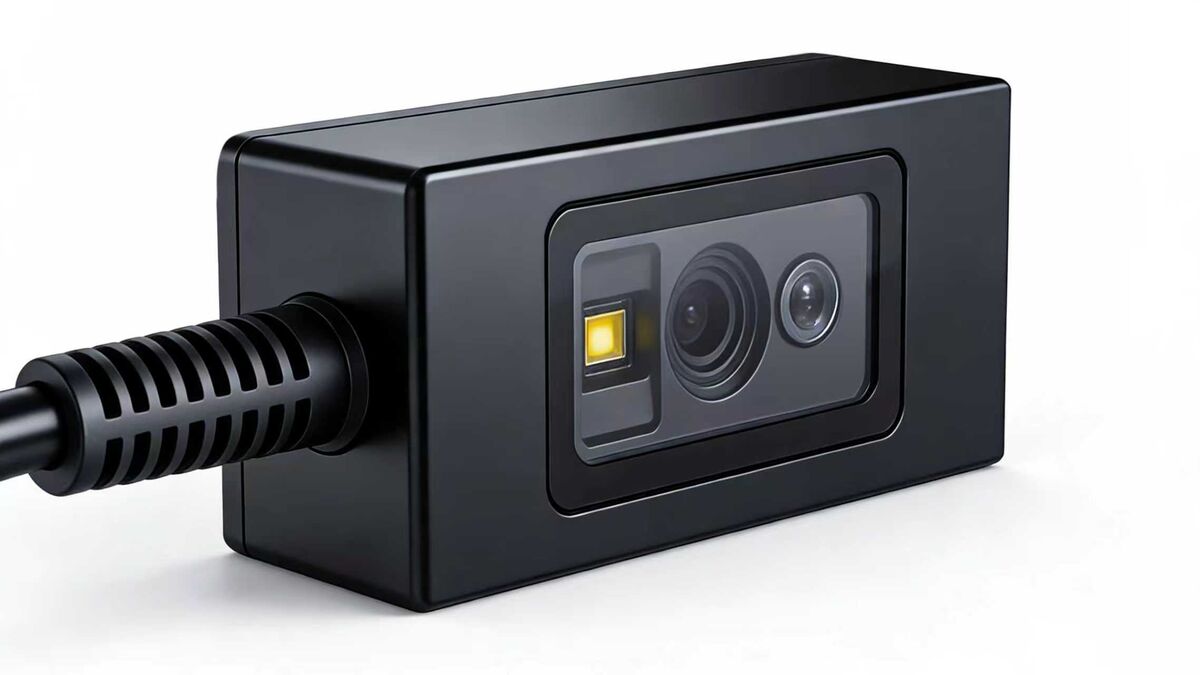
| Critical station error-proofing (in-line) | G4503 industrial fixed scanner | High-speed moving barcode reading, IP65 protection, IO and PLC linkage |
| High-speed lines / automated sorting | G4205 industrial fixed scanner | High-speed scanning + high-density Data Matrix small-code reading, purpose-built for traceability |
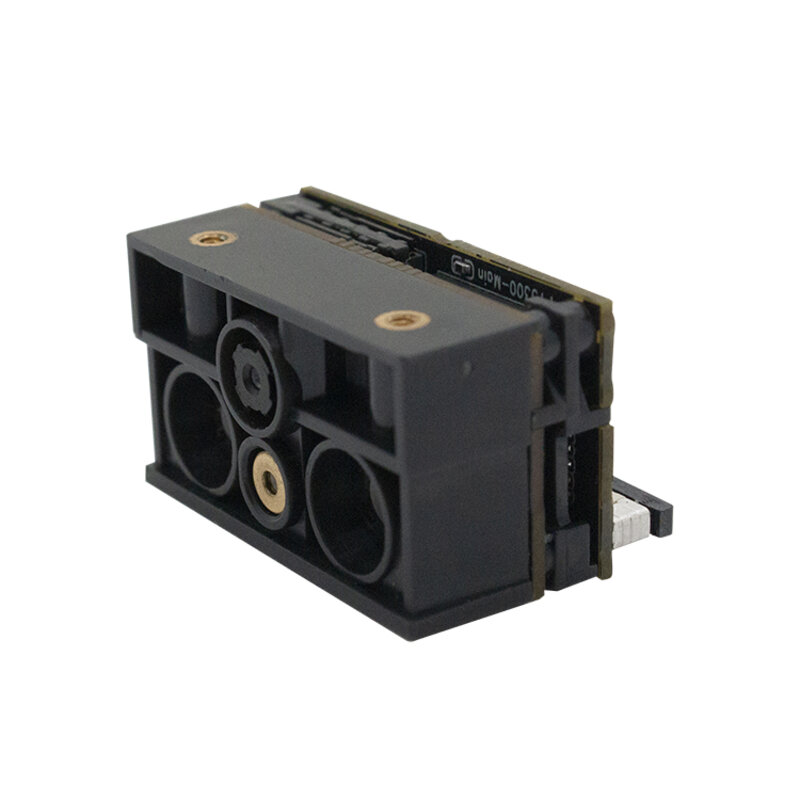
| Laser-engraved SN codes / PCB traceability | G1103 fixed read engine | Reading precision 1D ≤3mil / 2D ≤5mil, supports QR/DM/PDF417/Hanxin, small and embeddable |
| Device embedding / scan gates | F4100 embedded scan module | Small and easy to embed, SDK and protocol docs for integrators |
| After-sales repair / rework stations | XL-F24 network scanner | TCP/IP network connection, scan data posts directly to the traceability system |
4. 4 Key Points for Traceability Selection
1. High-Speed Moving Read Capability
Line cycle times are fast — a product may spend only a few hundred milliseconds in front of the scan window, or even need "read-while-moving". A trigger-style handheld cannot keep up; you need fixed auto-sensing models with high-speed decode engines and wide depth of field. Industrial fixed scanners like the G4503 and G4205 are designed for exactly this, with always-on automatic triggering and no manual button press.
2. Small Codes & Special Media
Electronics SNs are laser-engraved Data Matrix codes on PCBs — possibly just a few millimeters, on reflective metal. Automotive parts traceability codes may be cast into rough metal or rubber parts. These codes demand a lot from the equipment: focus on read precision (smaller mil values are stronger) and small-code decode algorithms. The G1103 achieves 1D ≤3mil / 2D ≤5mil precision, and the G4205 is specifically optimized for high-density Data Matrix.
3. Communication & PLC Linkage
Line scanners do not "scan for a human to look at" — they feed data to MES/PLC. Confirm the device supports RS232 / Ethernet / USB interfaces plus IO signal output — a "GOOD" signal to the PLC on a successful read, "NG" on failure, enabling error-proof release. The G4503 supports IO and PLC linkage and connects directly to existing line control systems.
4. Industrial Protection & Stability
Production environments have dust, oil, vibration and heat, with equipment running 7×24. Stability matters more than spec numbers. Choose industrial-grade protection (IP54 and above), fanless design and wide-temperature operation. Also check the vendor's warranty and after-sales response — when a line scanner goes down, the whole line stops, and that cost far exceeds the device price.
5. FAQ
Related Products

Related Articles
Working on a line traceability / MES data collection project?
Tell us about your stations and your hardest codes to scan (PCB small codes, reflective metal, high-speed lines…), free scanning solution design + sample testing.
📞 Contact Xinlong IoT