XL-G1 Industrial Scan Engine: Integration and OEM Customisation
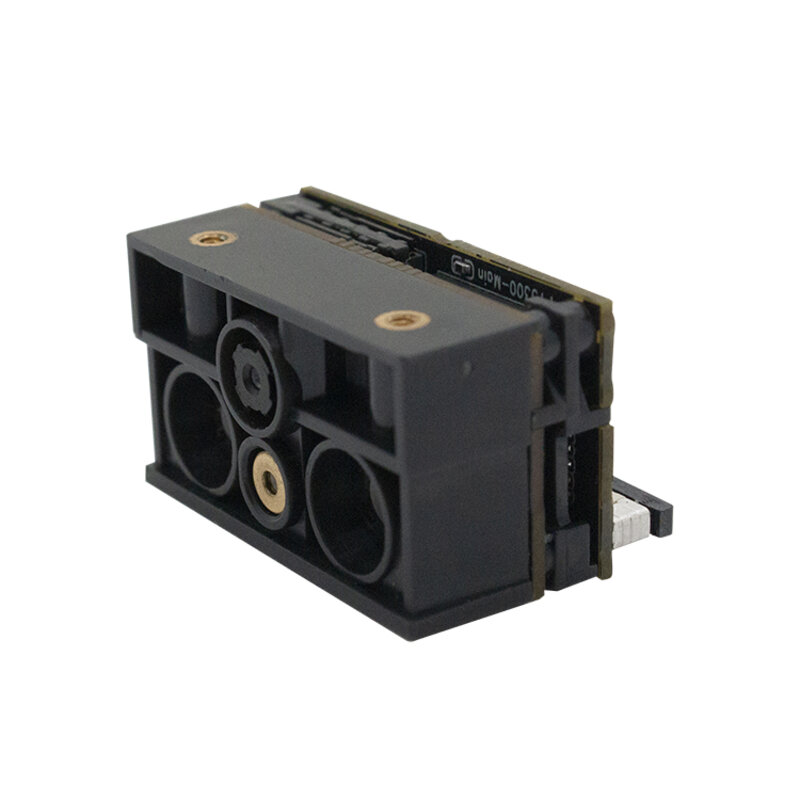
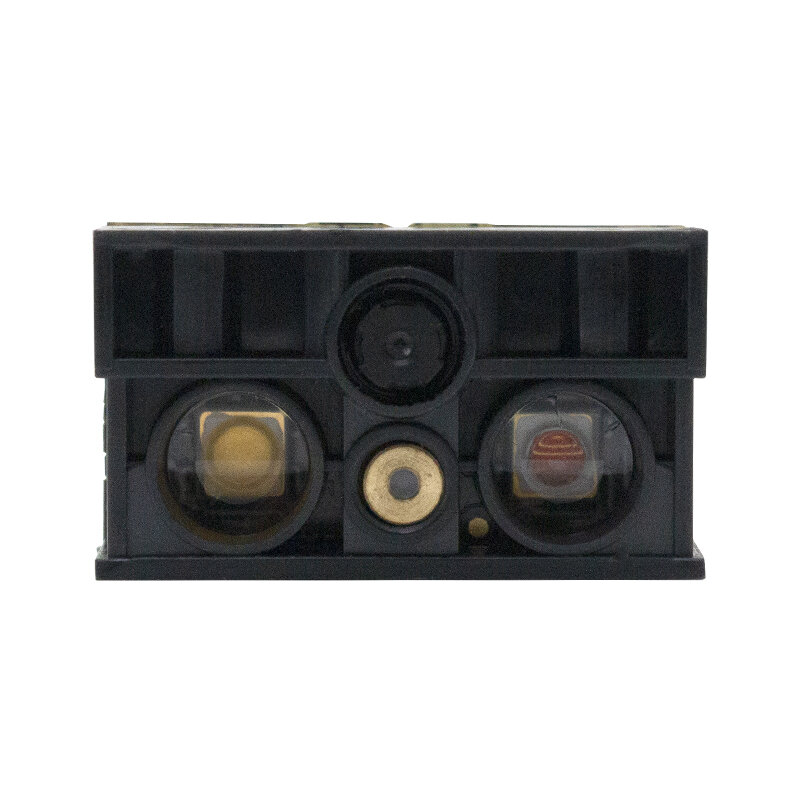
Fitting reading capability into an inspection machine, a marking system or a special-purpose scanning terminal asks more of an engine than "it scans". Industrial integration needs reading that holds up on difficult codes, interfaces that match the host board, and logic that can be adapted to the machine. The XL-G1 industrial scan engine is built for that brief: a 1296×816 megapixel CMOS sensor, a dual-core CPU to accelerate decoding, strong DPM dot-peened code reading, and open support for secondary development and functional customisation. It covers barcode reading in industrial control equipment, data capture on automated production lines and integration into special-purpose scanning devices — configured to the requirements of the equipment it goes into.
1. Why XL-G1
Codes on an industrial floor are rarely well behaved: laser-marked codes on reflective metal, low-contrast characters, reflections off glass, dot-peened DPM marks. A general-purpose engine stalls on them and the line stops. The XL-G1 pairs a 1296×816 high-resolution CMOS image sensor with a dual-core CPU processor that accelerates decoding, so low-contrast, reflective and dot-peened codes are still decoded reliably, first-read rates stay high under difficult conditions, and the engine keeps running through 24/7 operation.
Openness is the other point industrial integrators weigh: secondary development and functional customisation let the trigger method, output format and reading logic be adapted to the host device. Communication runs over TTL-232 and USB, matching common industrial mainboards and host computers. Cross laser aiming with red and white illumination that switches automatically picks the suitable auxiliary light whether the workpiece is dark or the environment is bright, which makes scanning faster and more precise.
2. Application scenarios
2.1 Embedded scanning in industrial control equipment
Inspection equipment, marking machines, labelling machines and sorting machines gain scanning capability by fitting the XL-G1 into the machine head. The engine is compact and flexible to mount, connects to the industrial mainboard over TTL-232 or USB, and streams barcode data in real time — turning a machine that only performed mechanical actions into one that identifies parts and captures data on its own.
2.2 Data capture on automated production lines
Parts move quickly along a line, and codes arrive with the motion. The XL-G1 decodes fast and tolerates movement, so it can be fixed at a workstation to read part barcodes automatically and bind process data to them, giving traceability from incoming material through work-in-process to finished goods. Adaptive red and white illumination covers metal parts, dark parts and transparent packaging.
2.3 OEM customisation for special-purpose devices
Manufacturers of handheld terminals, industrial PDAs and fixed readers can build on the XL-G1 through secondary development: firmware and parameters customised to the product's mechanical design, output protocols that follow the device logic, and volume delivery under the customer's own brand. An open engine for industrial use plus vendor-level technical support shortens the development cycle considerably.
2.4 DPM dot-peened codes and highly reflective workpieces
Laser dot-peened codes (DPM) used for medical device UDI and electronic component traceability, and barcodes on strongly reflective surfaces such as metal and glass, are where the XL-G1 is strongest: industrial DPM decoding combined with an intelligent illumination strategy reads low-contrast, dot-peened and reflective codes accurately, meeting the traceability requirements of electronics, automotive parts and medical manufacturing.
3. Specifications
| Item | Specification |
|---|---|
| Image sensor | 1296×816 CMOS (megapixel class) |
| Processor | Dual-core CPU, accelerated decoding |
| Illumination | White + red, intelligent switching |
| Aiming | Cross laser |
| Reading precision | 3.3 mil |
| Symbologies | 1D: Code 11/32/39/93/128, EAN-8/13, UPC-A/E, Codabar, Interleaved 2 of 5, IATA 2 of 5, Matrix 2 of 5, Straight 2 of 5, MSI/Plessey, GS1 DataBar, etc.; 2D: QR, Micro QR, Data Matrix, MicroPDF417, PDF417, Aztec, Grid Matrix, etc. |
| Typical depth of field | Code 128 3.3 mil: 4.5–11 cm; Code 128 10.83 mil: 4–20 cm; Code 128 20 mil: 6–27 cm; QR 20 mil: 6–28 cm |
| Minimum contrast | 20% |
| Reading angle | Tilt ±75°, skew ±60°, rotation 360° |
| Ambient light | 0–100,000 Lux |
| Interfaces | TTL-232, USB |
| Dimensions | 30×17×19.5 mm (max) |
| Weight | 8.4 g |
| Operating voltage | 3.3 V ±5% |
| Rated power / current | 460 mW typical / 140 mA at 3.3 V typical |
| Peak power / current | 2 W / 600 mA at 3.3 V |
| Operating temperature | −20 °C to +50 °C |
| Storage temperature | −40 °C to +70 °C |
| Working humidity | 5–95% (non-condensing) |
| Configuration tool | ImageTool, for parameter setup and firmware updates |
For integrators the first decisions are mounting position and illumination: the cross laser and the switching red/white illumination define where the engine can be fitted and how the workpiece should pass the read window. Because the engine is designed for secondary development, trigger behaviour, output format and decoding logic can follow the host machine rather than the other way round, and ImageTool handles parameter configuration and firmware updates in the field.
Related products
XL-G1 Scan EngineOEM Scan Engines
 G53-AI AI Scan ModuleOEM Scan Engines
 XL-108 OEM EngineOEM Scan Engines
Related articles
Developing a barcode device? Get a free sample.
Tell us your device type and internal space — free sample testing, order only after you are satisfied with the read rate.
📞 Contact Xinlong IoT