XL-P80 High-Speed Scan Platform: High-Throughput Scanning for Supermarket Checkouts
At the checkout, the line moves at the speed of the scanner. Product barcodes, phone payment codes and member codes share one counter all day long, and every item that takes an extra moment costs the queue more. The XL-P80 high-speed 2D scan platform puts a 120-scans-per-second engine, a large scan window and auto-sensing continuous scanning on the counter — scan-on-approach speed with both hands free. This guide covers what a checkout really scans, why the platform format works, deployment with existing POS systems and the full specifications.
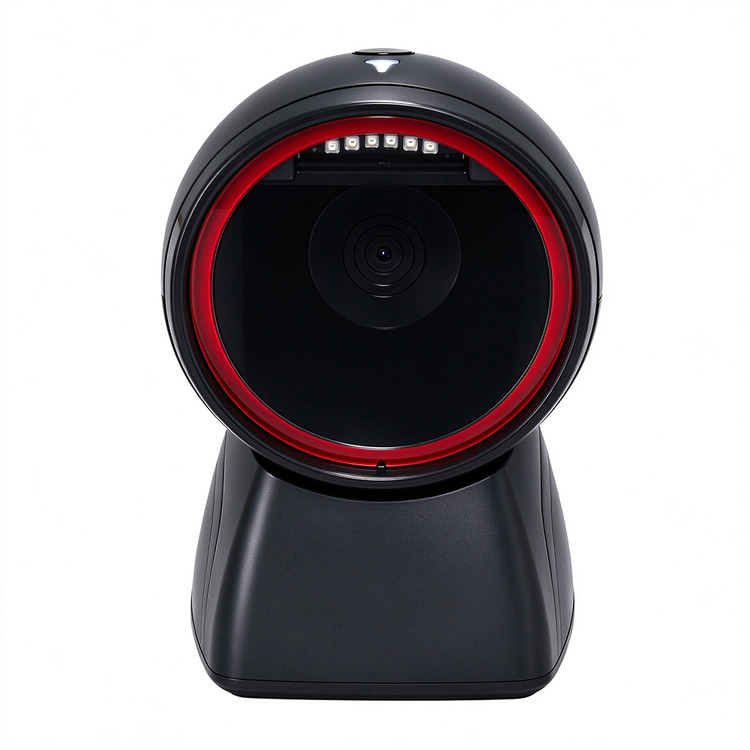
XL-P80 high-speed 2D scan platform · a large window built for busy checkouts
1. Three Kinds of Codes at the Checkout
They all look like “barcodes”, but the three codes on a checkout counter ask different things of the scanner:
Product barcodes: mostly 1D, high volume, all kinds of packaging — curved, creased and glossy surfaces included. They need a wide window and forgiving read angles.
Phone payment codes: screen codes at every brightness level, often under anti-peep films. They test screen-code optimisation and response time.
Member codes: screen codes again, called up frequently and scanned repeatedly between product items.
At peak hours all three take turns at the same device. Every missed code costs a re-scan, an apology and a few more seconds — multiplied by hundreds of customers. The question is not whether a scanner can read them, but whether it reads them reliably and fast — that is what the XL-P80 is built for.
2. Fast Reading, Auto-Sensing Triggers
The XL-P80 carries a new 300,000-pixel scan engine: 640×480 CMOS with red LED illumination, a scan rate of 120 scans per second, minimum resolution of 4 mil and print contrast down to 20%, with scan angles of 360° / ±60° / ±60° — everyday barcodes rarely need careful aiming. The wide 44°×34° field of view and 20 cm working distance let cashiers pass items at a natural pace, without steadying each code in the middle of the window.
The bigger win is not waiting: auto-sensing continuous scanning activates the moment a code comes near and reads codes back to back, no trigger needed, and sleeps automatically when idle. A cashier slides an item past the window one-handed; at rush hour the items keep coming and the line keeps moving.
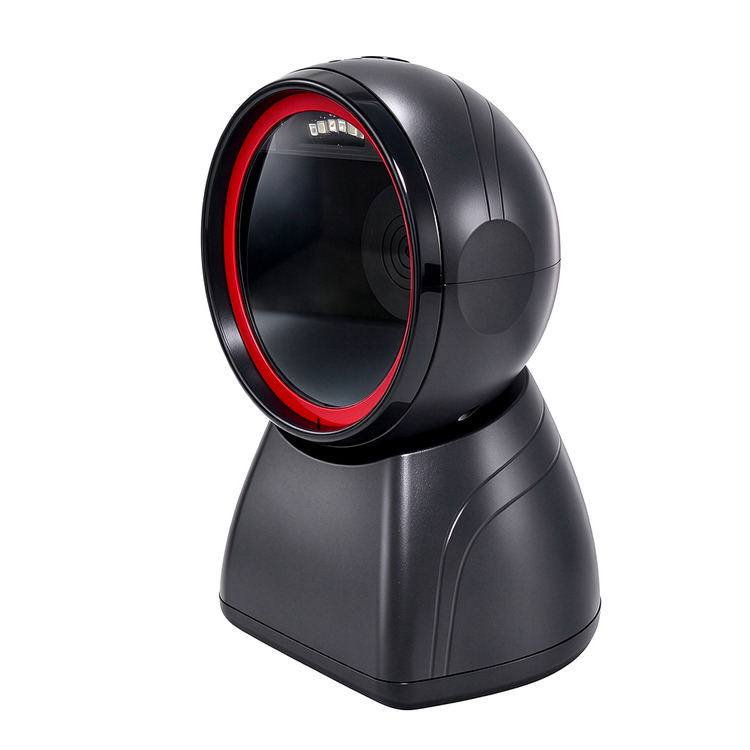
Rotatable scan head · four non-slip feet keep the platform steady on the counter
3. Deployment and On-Site Setup
Three interface options: USB-HID keyboard for true plug-and-play with Windows 7/8/10, macOS and mainstream POS systems, plus USB-COM virtual serial and RS232 for legacy terminals. To the POS software it is simply a new “keyboard” — swapping out an old unit usually needs no software change.
On the counter, the 145×90×90 mm body keeps the space clear, the four non-slip feet hold it steady and the 1.5 m straight cable routes without strain. The scan head rotates to set the best angle for the counter, the register or the pharmacy bench.
Setup needs no computer: physical buttons on the body handle configuration on site, four tone styles and a soft LED indicator confirm each read in noisy stores. One detail supermarkets appreciate — QR reading can be switched off to avoid mis-scanning shelf or packaging codes while 1D barcodes keep working, and switched back on when needed. Power comes straight from the POS USB port or a standard DC 5 V supply — 240 mA working, 190 mA standby — so there is nothing extra to install.
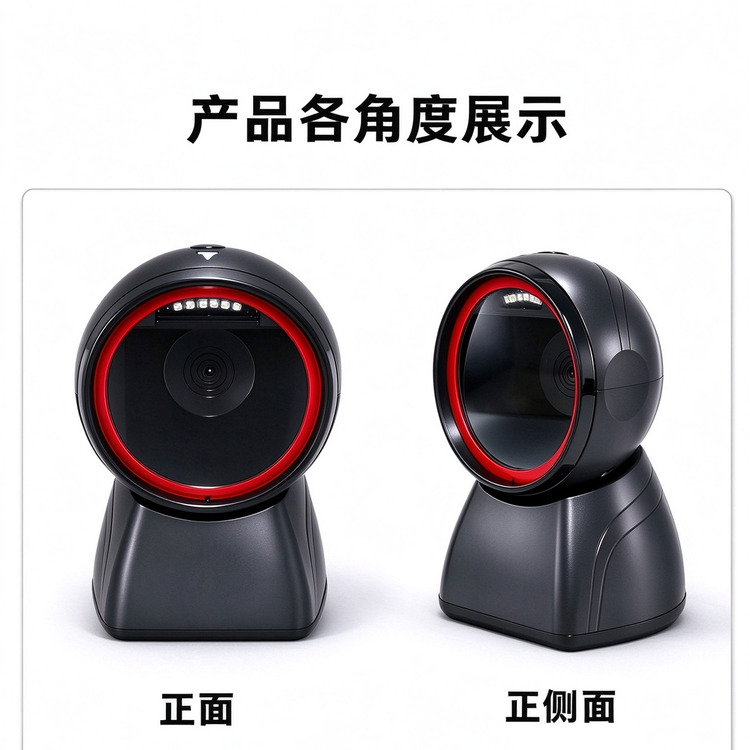
Front and side views · DC 5 V, 240 mA working and 190 mA standby
4. Also at Home in Convenience Stores, Pharmacies and Food Service
Scan-on-approach is not only for supermarkets: the short counter of a convenience store, the narrow bench of a pharmacy and the busy till of a restaurant all mix product barcodes with phone payment codes — and a platform never occupies the cashier’s hands. Whether the counter handles a hundred items an hour or many times that at peak, the format keeps both hands on the goods. Operating temperature 0°C to 50°C and an ABS+PC housing keep it simple to live with.
5. Specifications
| Item | Specification |
|---|---|
| Type | High-speed 2D scan platform (desktop) |
| Scan engine | 300,000 pixels; 640 × 480 CMOS with red LED |
| Field of view | 44° (H) × 34° (V) |
| Scan rate / resolution | 120 scans per second / ≥ 4 mil |
| Print contrast / scan angles | ≥ 20% / 360°, ±60°, ±60° |
| Symbologies | 1D barcodes, 2D codes, phone screen codes, saved payment codes (QR reading can be toggled off) |
| Interfaces | USB-HID keyboard / USB-COM virtual serial / RS232 |
| Compatibility | Windows 7/8/10, macOS and mainstream POS systems; driver-free USB |
| Trigger / feedback / setup | Auto-sensing continuous scan, auto sleep when idle; 4 tone styles + LED indicator; on-body buttons |
| Input / current | DC 5 V ± 10%; 240 mA working, 190 mA standby |
| Dimensions / weight | 145 × 90 × 90 mm / 245 g |
| Base / cable | Four non-slip feet; rotatable scan head; 1.5 m straight cable |
| Operating temperature | 0°C to +50°C (storage -20°C to +70°C) |
| Humidity / housing | 5%–95% (non-condensing) / ABS + PC |
| Applications | Supermarkets, convenience stores, pharmacies and food service checkout scanning |
Related products
XL-P80High-speed 2D scan platform (this article)
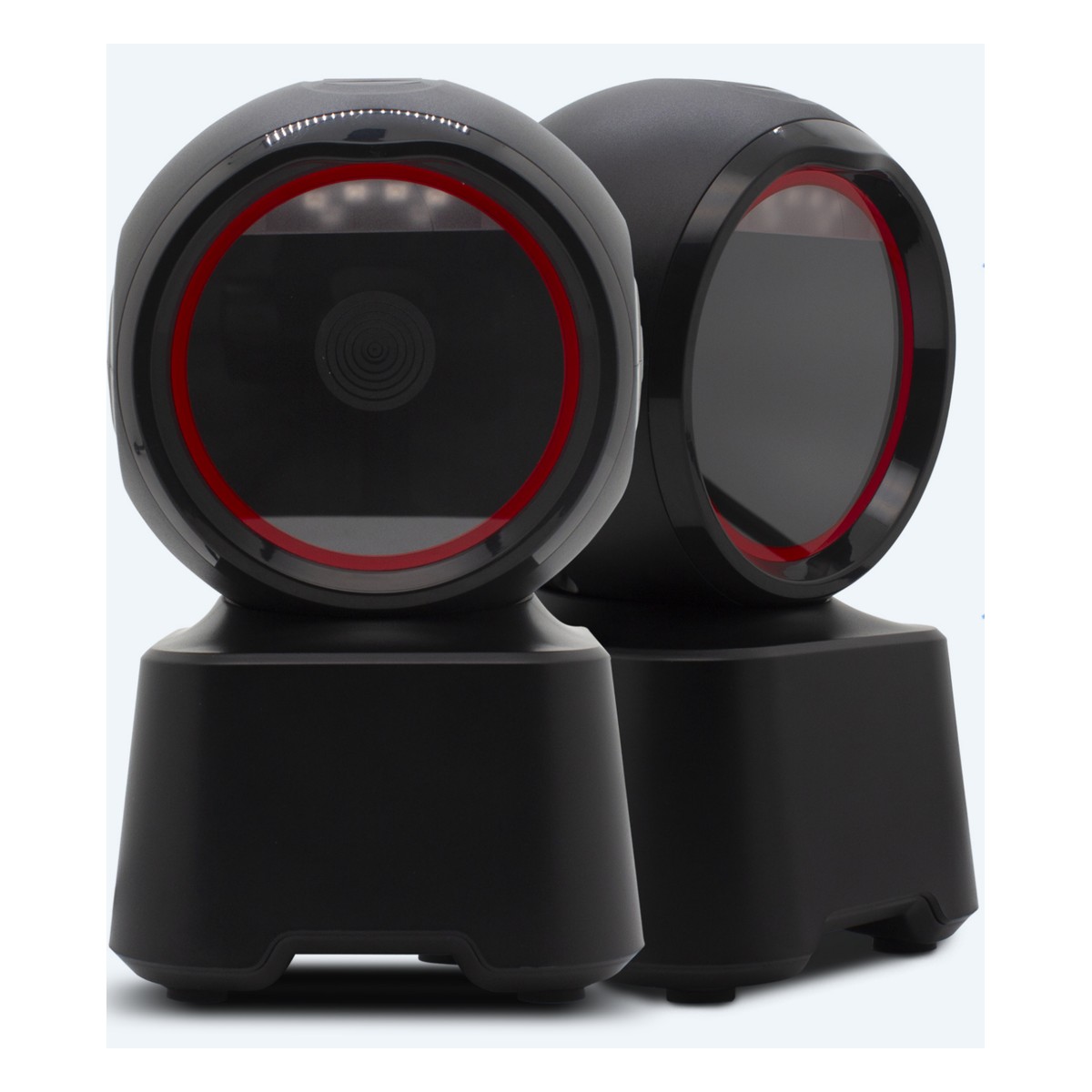 X6Checkout scan platform
 XL-A60Embedded scan platform
Related articles
Speeding up the checkout line?
Send your POS model and in-store scanning requirements — free sample testing, with engineering help to choose between platform and embedded options.
📞 Contact Xinlong IoT