F31-BW Industrial Scan Engine: Technical Highlights and Applications in Handhelds, PDAs and Portable Devices
A scan engine inside a handheld has one of the tightest design envelopes in the industry: a few square centimetres of space, a battery budget measured in milliwatts, and no tolerance for missed scans. The F31-BW industrial scan engine measures 36×14×11.3 mm, weighs 5 g, and carries a 680×480 CMOS sensor with white illumination. One 12-pin FPC cable delivers both TTL-232 and USB.
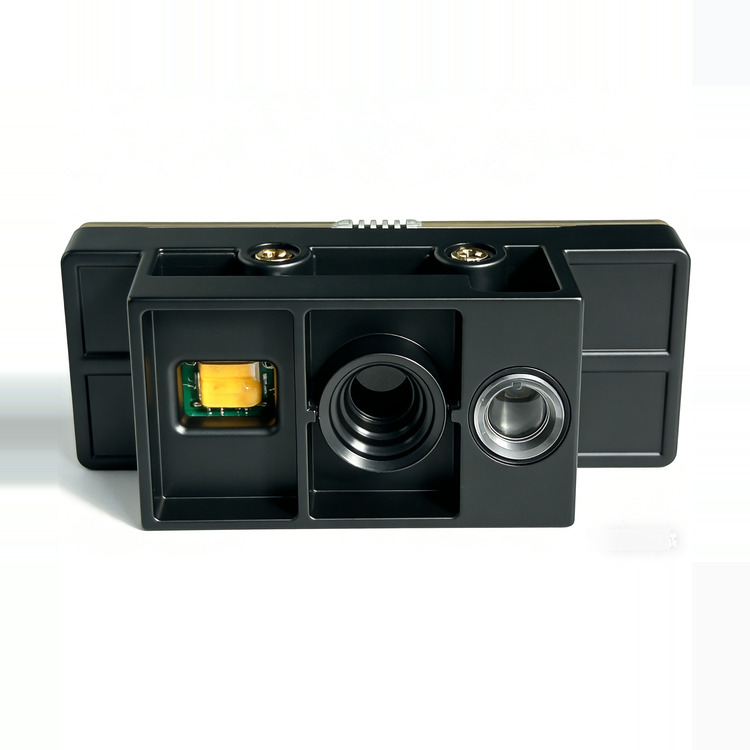
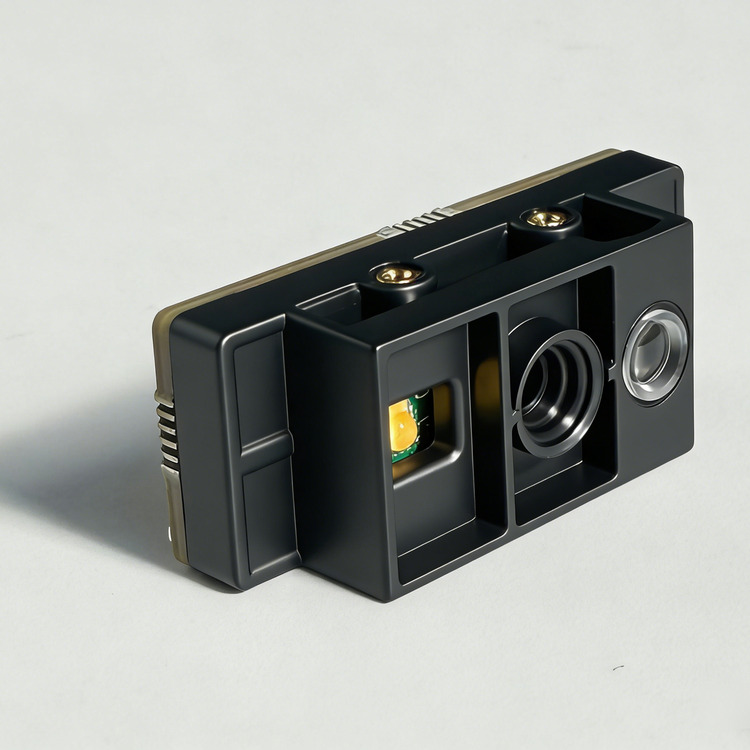
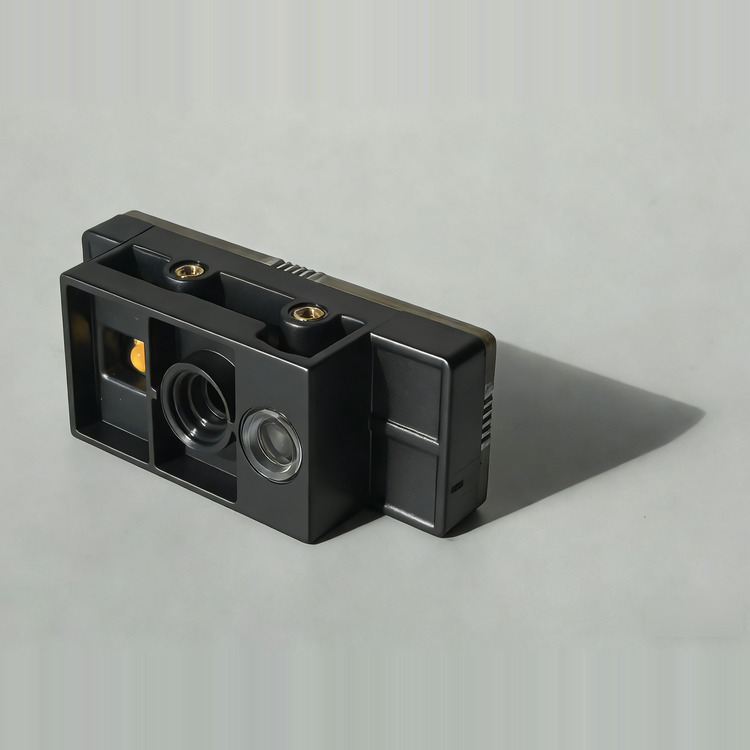
F31-BW scan engine · front and both side views (36×14×11.3 mm max / 5 g)
1. Technical highlights
1.1 Compact and light enough for handheld structures
At 36×14×11.3 mm and 5 g, the F31-BW does not force designers to thicken a scanner grip or a PDA head. The front face needs only three openings — camera, illumination and aimer (7.5 mm / 8.75 mm centre distance) — and the base provides M1.6×3 mounting holes on an 11.5 mm pitch, matching common fixtures.
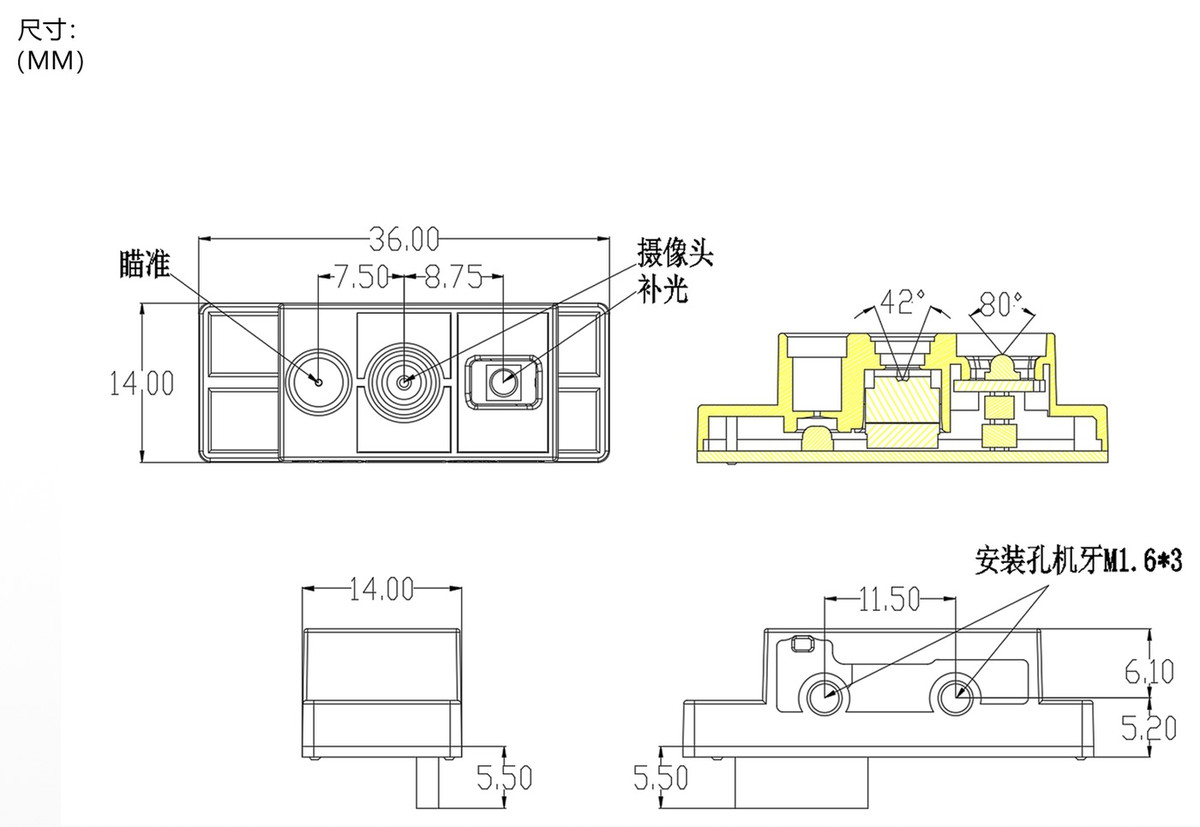
Mechanical drawing: 36 mm long, 14 mm high; M1.6×3 mounting holes on 11.5 mm pitch
1.2 680×480 CMOS with white illumination
Reading precision is ≥3.3 mil. Typical depth of field: Code 128 at 3.3 mil from 5–8 cm, Code 128 at 10 mil from 4–21 cm, QR at 20 mil from 5–26 cm. Minimum contrast is 25% and ambient light spans 0–100,000 Lux, covering dim aisles and direct sunlight. With ±60° tilt, ±60° skew and 360° rotation, operators need not square the scanner to a label.
1.3 TTL-232 and USB on one cable
The 12-pin, 0.5 mm pitch FPC connector breaks out TTL-232 and USB at the same time, so one module covers both host designs without a different part number.
| Pin | Signal | Function |
|---|---|---|
| PIN2 | VCC | +3.3 V input |
| PIN3 / PIN8 | GND | Ground |
| PIN4 / PIN5 | UART_RXD / UART_TXD | TTL-232 receive / transmit |
| PIN6 / PIN7 | USB_D- / USB_D+ | USB differential pair |
| PIN9 | BEEP | Buzzer output (PWM), low when idle |
| PIN10 | DLED | Decode-success indicator, ~300 ms high pulse |
| PIN12 | TRIG | Trigger input, active low / falling edge |
| PIN1 / PIN11 | TEST1 / TEST2 | Internal test pins — leave floating |
1.4 Trigger and feedback signals for the whole user interface
TRIG accepts level and pulse triggering (pulse width ≥50 ms), BEEP outputs a PWM tone, and DLED pulses high for about 300 ms on every successful read, so the trigger key, buzzer and indicator light can all be designed around the engine.
1.5 Low power, wide environment range
Operating voltage is 3.3 V ±5% with a typical draw of 200 mW (about 65 mA at 3.3 V). Storage temperature spans −40 °C to +70 °C, working humidity 5–95% (non-condensing).
1.6 Configurable through setup codes, serial commands and ImageTool
Five reading modes are available: manual trigger, continuous, single-shot, image sensing and batch reading. Prefixes and suffixes, USB-HID / USB-CDC / USB-HID-POS, TTL-232 baud rate, symbology toggles and DPM reading are configured with setup codes or serial commands, while ImageTool lets engineers verify results on the bench without reflashing.
2. Applications
2.1 Handheld terminals and industrial PDAs
Warehouse picking, store inventory and last-mile delivery run on devices held for hours and expected to last a shift. 5 g and 200 mW barely register in the battery or mechanical budget, and having both TTL-232 and USB makes the engine easy to drop into an existing mainboard.
2.2 Portable medical and mobile nursing devices
Bedside care, sample collection and mobile rounds depend on reading wristbands, tube labels and medicine packaging. The ≥3.3 mil precision suits small labels, while 0–100,000 Lux covers dim wards and outdoor transfer alike.
2.3 Power inspection and outdoor field equipment
Inspection meters and meter-reading terminals work in bright sun and cold weather. The engine keeps reading at high illuminance, tolerates −40 °C to +70 °C storage, and 360° rotation keeps one-handed operation comfortable.
2.4 Self-service cabinets and production workstations
Self-service lockers and workstation terminals usually have narrow read windows; a 36 mm-wide engine fits slim bezels. On a production line, the 5–26 cm depth-of-field range gives engineers freedom in mounting distance.
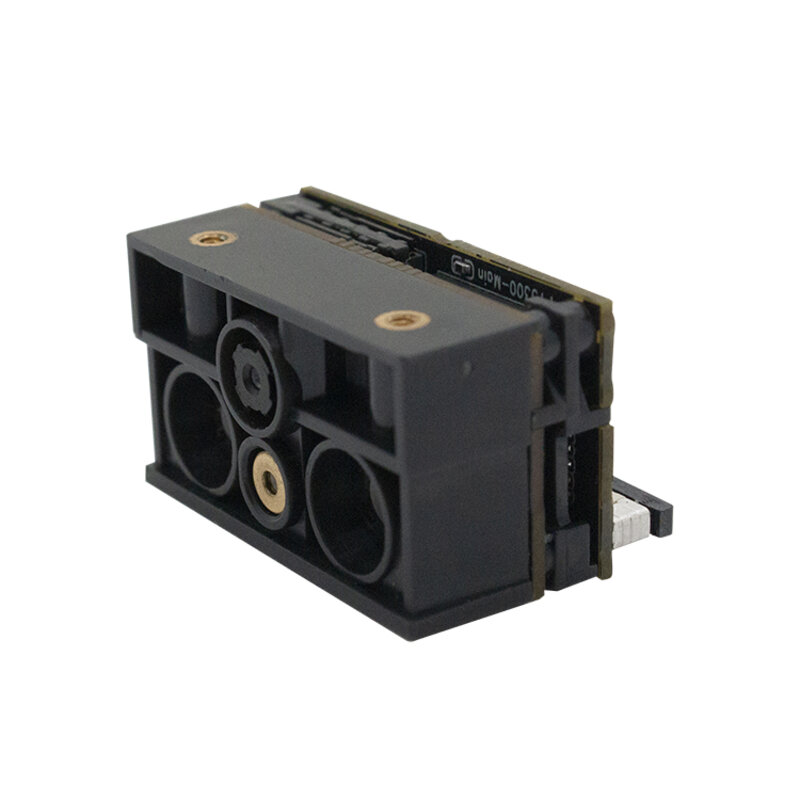
One 12-pin FPC cable to the host board — TTL-232 or USB
3. Specifications
| Item | Specification |
|---|---|
| Type | Embedded 2D scan engine (industrial grade) |
| Image sensor | 680×480 CMOS |
| Illumination / aiming | White LED illumination / red dot aimer |
| Reading precision | ≥3.3 mil |
| Typical depth of field | Code 128 3.3 mil: 5–8 cm; Code 128 10 mil: 4–21 cm; QR 20 mil: 5–26 cm |
| Minimum contrast | ≥25% |
| Reading angle | Tilt ±60°, skew ±60°, rotation 360° |
| Field of view | 42° horizontal, 31.5° vertical |
| Ambient light | 0–100,000 Lux |
| Interfaces | TTL-232, USB (12-pin 0.5 mm FPC connector) |
| Dimensions | 36×14×11.3 mm (max) |
| Weight | 5 g |
| Operating voltage | 3.3 V ±5% |
| Power / current | 200 mW typical / 65 mA at 3.3 V typical |
| Storage temperature | −40 °C to +70 °C |
| Working humidity | 5–95% (non-condensing) |
| Configuration tool | ImageTool |
Related products
F31-BWIndustrial scan engine (this article)
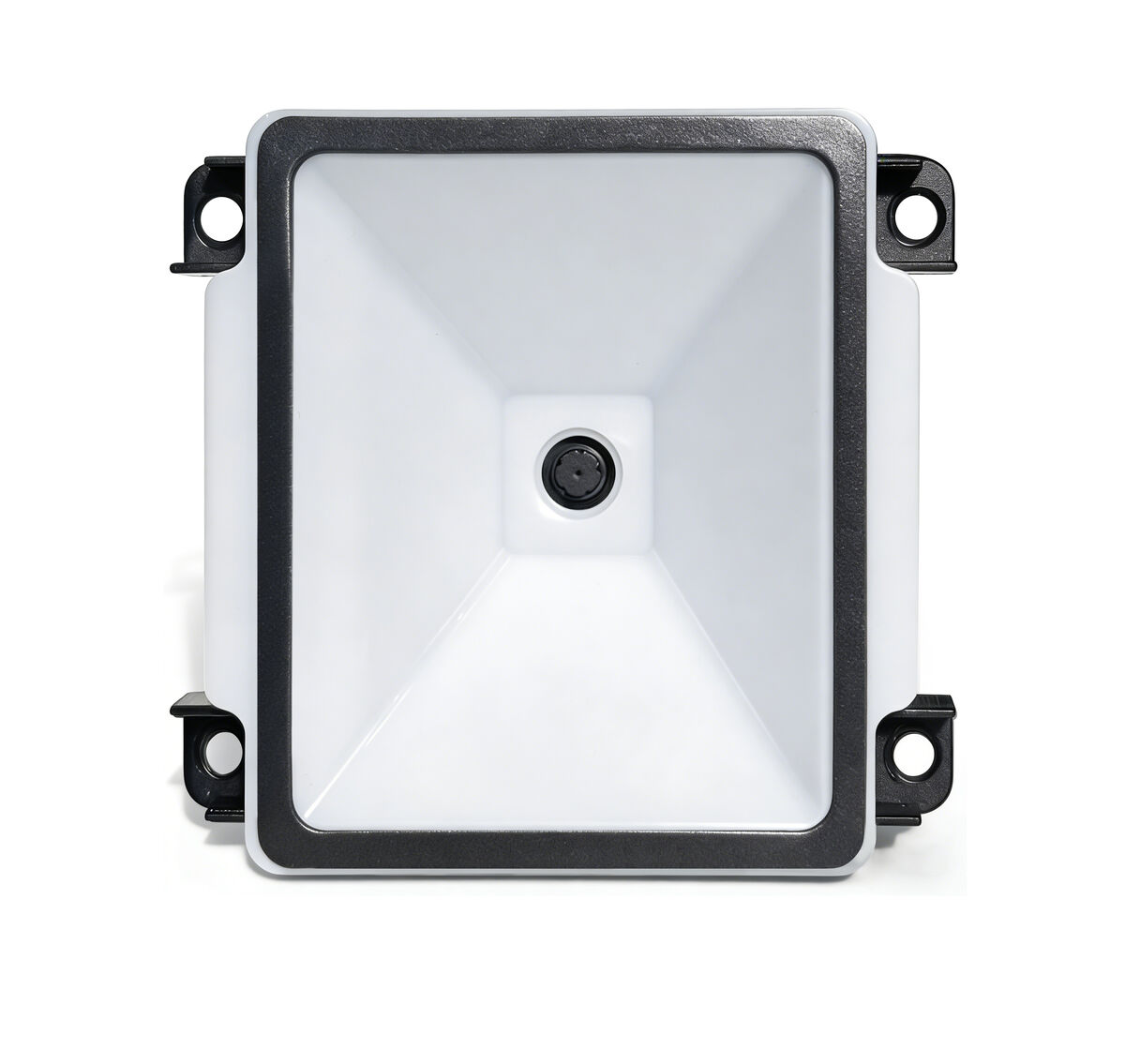
 XL-F3-BWAll-in-one scan engine
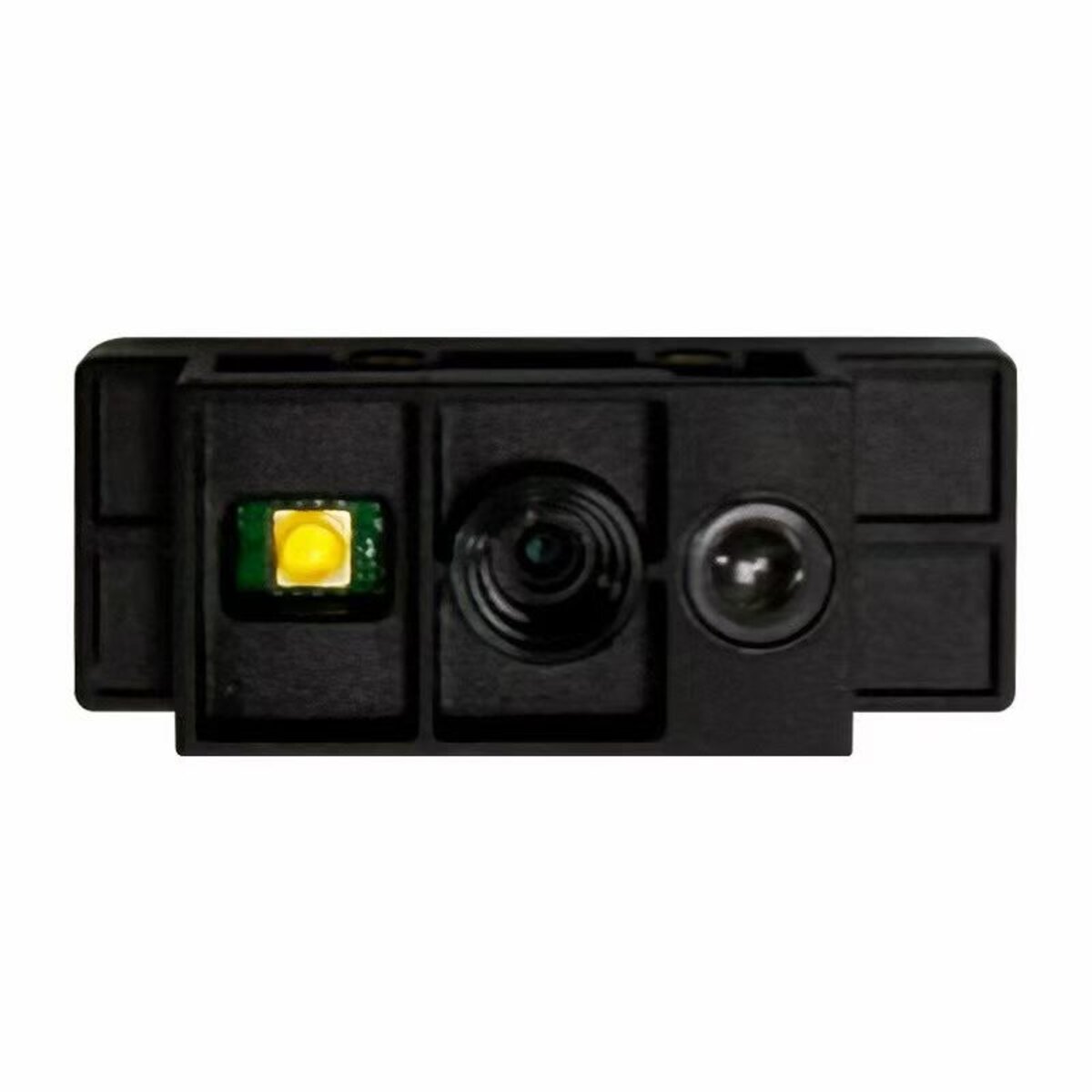
 XL-108OEM barcode engine
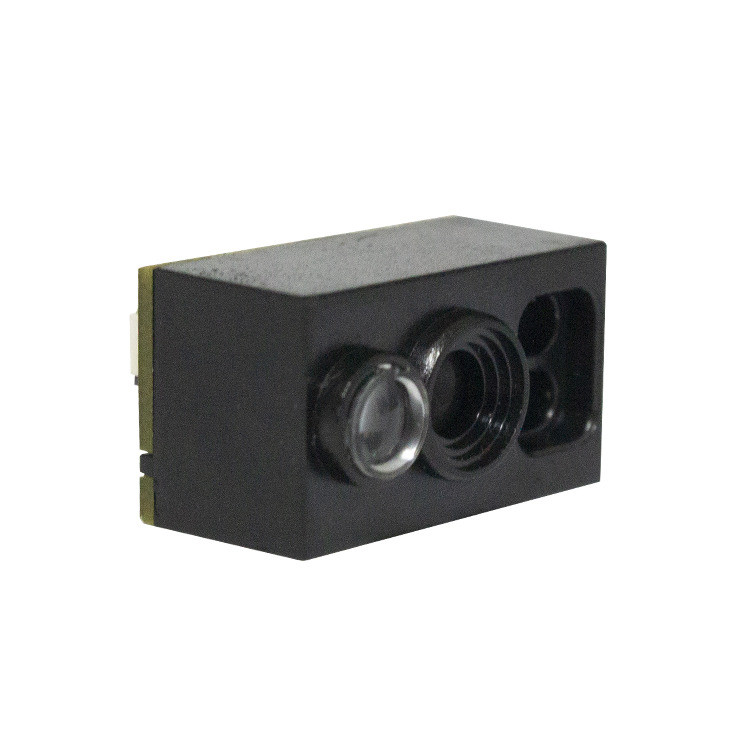
 XL-G1Industrial scan engine
Related articles
Developing a barcode device? Get a free sample.
Tell us your device type and internal space — free sample testing, order only after you are satisfied with the read rate.
📞 Contact Xinlong IoT