Embedded Barcode Scanner Modules
XL-A80 Embedded Barcode Scanning Platform
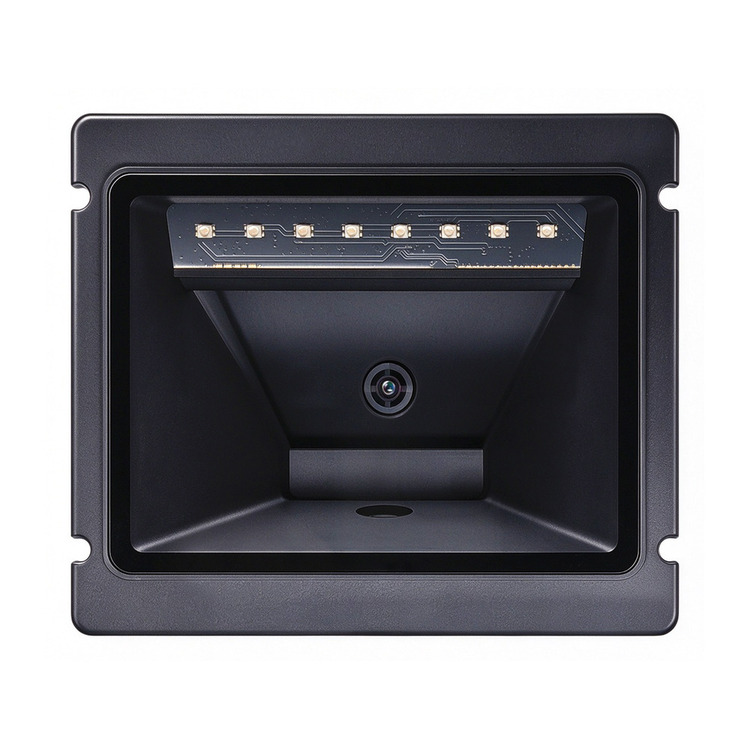
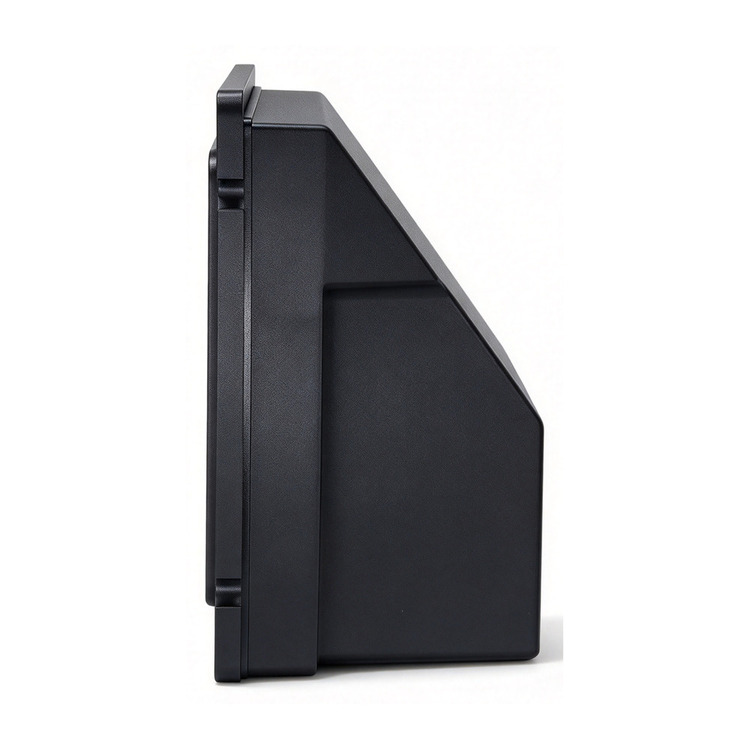
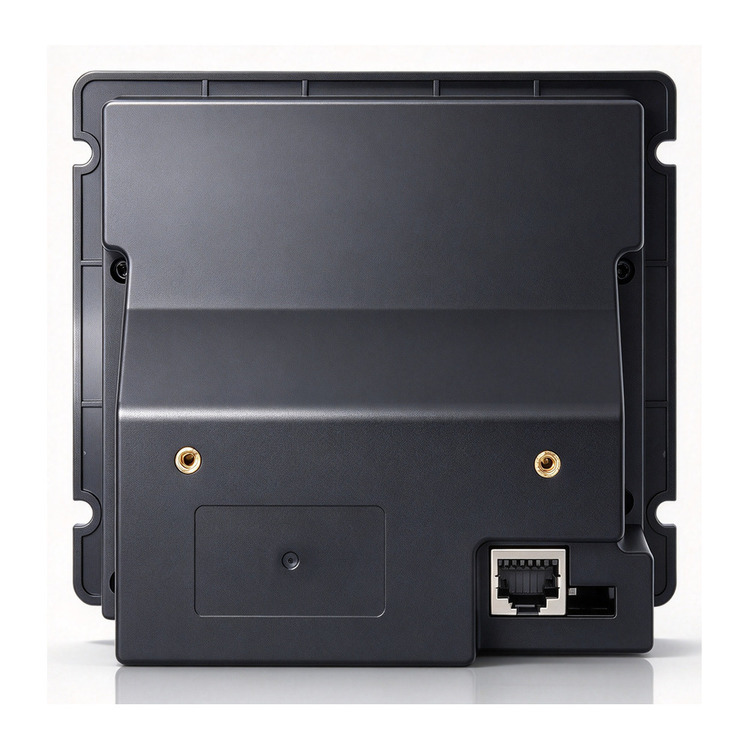
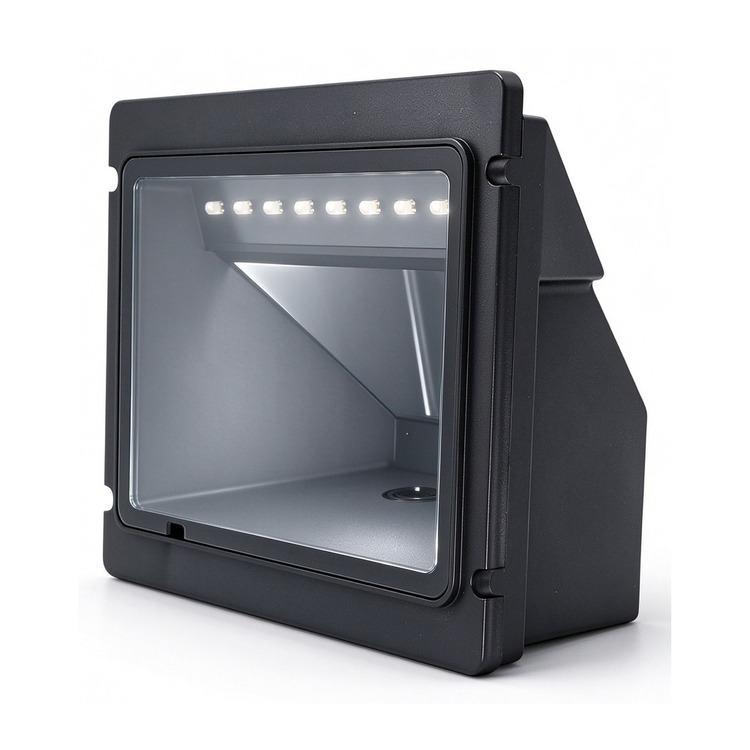
XL-A80 is an embedded barcode scanning platform for self-service terminals and countertop integration. Its published reference dimensions are 142.65 × 118.65 × 67.70 mm, with a 127.04 × 93.04 mm front window. The wedge-shaped housing has a 5.00 mm front bezel, upper-edge LED illumination and a central imaging lens. Corner mounting positions and two M3 mounting points support mechanical integration. Confirm the installation opening, connector clearance and supplied reading configuration before finalising your enclosure.
- Dimensions 142.65 × 118.65 × 67.70 mm, wedge-shaped body
- Scan window 127.04 × 93.04 mm, about 70% of the front face
- 5.00 mm front bezel for panel or countertop integration
- Black engineering-plastic housing with matt anti-reflection cavity
- Four corner screw positions plus 2 × M3 standoffs (75.00 mm centres, 40.50 mm from bottom)
- Side slots 80.00 mm high, centre bottom cut-out for cables and clips
- Upper-edge LED illumination, central imaging lens and a flat front window
- For self-service checkout, ordering kiosks, access gates, parcel lockers and retail counters
Panel-mount / countertop-embedded reader. Share your barcode sample, installation layout and required host connection for evaluation.
Embedded barcode reader for self-service kiosks
Use XL-A80 when the reader needs to be integrated into a panel, counter or terminal enclosure. Its large front window and recessed housing provide a starting point for a self-checkout or kiosk layout. Mounting suitability and code-reading results must be checked on the actual sample in the intended installation.
Mechanical integration reference
- Published overall dimensions: 142.65 × 118.65 × 67.70 mm.
- Published front-window dimensions: 127.04 × 93.04 mm.
- Wedge-shaped housing with a 5.00 mm front bezel.
- Two M3 mounting points; reference centres 75.00 mm, reference distance from the bottom 40.50 mm.
- Verify panel opening and mechanical tolerances against the approved installation drawing before machining.
Sample evaluation checklist
For self-checkout, ordering kiosks or other self-service terminals, provide the actual barcode samples, code dimensions, surface or display conditions, presentation distance and movement, mounting layout and required host connection. Confirm the optical performance, interface, cable pinout and power supply for the final configuration. These electrical and reading-performance values are not yet confirmed in the published XL-A80 brochure.
Discuss your XL-A80 sample evaluation →
FAQ
Is XL-A80 a desktop scanner or an embedded reader?
XL-A80 is intended for panel or countertop integration in self-service terminals. Choose it as an embedded reader assembly; confirm the enclosure and mounting arrangement for your project.
What panel cut-out and cable clearance should I use?
Use the approved installation drawing for the supplied unit to confirm the panel cut-out, panel thickness, mounting tolerances and connector clearance before machining. The published overall dimensions and optical-window dimensions are not the machining cut-out. Allow cable space according to the selected connector and cable requirements.
How do I confirm the interface and barcode reading performance?
Send the required host interface, barcode type and size, printed or screen samples, presentation distance and installation constraints. Confirm the sensor, supported code types, reading performance, pinout and power requirements against the final datasheet and sample test for the supplied configuration before ordering or powering the reader.