XL-M100P Technical Guide & Applications: Integrating a 21.7x7.2x9 mm Embedded 2D Scan Module
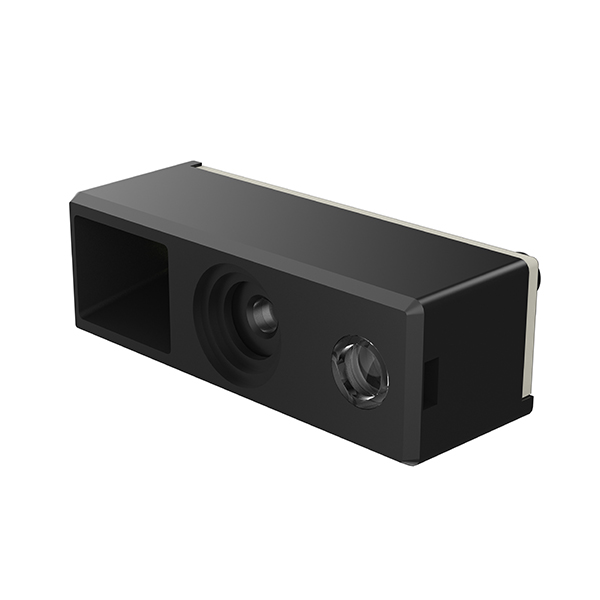
The XL-M100P is an embedded 2D scan module measuring just 21.7 x 7.2 x 9 mm and weighing under 5 g: a 640x480 CMOS sensor at 30 fps behind a 37 x 28 degree wide-angle optic, 1D from 4 mil and 2D from 10 mil, with TTL-232 and USB 2.0 on a single 13-pin 0.3 mm flexible cable, running on +3.3 V at 170 mA. This technical guide covers optics and depth of field, the 13-pin pinout and interface options, electrical and reliability data, and the selection logic for six typical applications.
1. Positioning: a reading engine inside your product
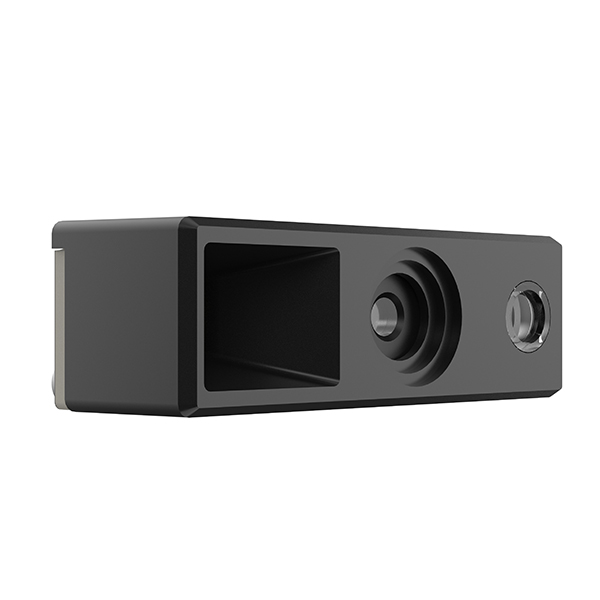
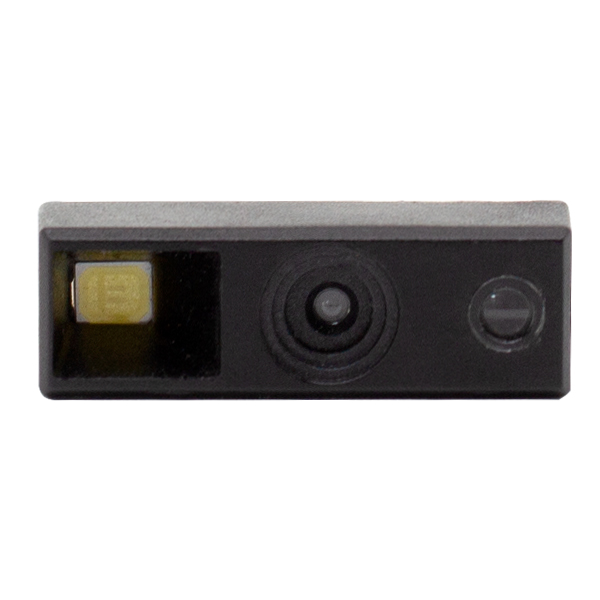
The XL-M100P is not a handheld scanner but a reading core that disappears inside another device: a 21.7 mm long, 7.2 mm wide body fits a ring housing, a chest pendant or a pocket reader handle, and under 5 g barely affects battery budget or balance. It works in one simple loop - idle, then on TRIG (or a host command, or auto-sense / continuous mode) expose, decode, and output over TTL-232 or USB while driving your own buzzer and status LED through BEEP and DLED.
It works in one simple loop: power up and idle, then on a TRIG pulse (or a host command, or in auto-sense / continuous mode) it exposes the sensor, decodes, and outputs the result over TTL-232 or USB while driving your own buzzer and status LED through the BEEP and DLED pins. Enclosure, battery, display and radio stay yours - the module just handles seeing the code.
2. Reading performance: optics, depth of field, symbologies
A 640 (H) x 480 (V) CMOS sensor at 30 fps sits behind a 37 (H) x 28 (V) degree wide-angle lens, so flat and tilted labels both land in frame; a 6500 K white fill LED with a red aimer keeps reads stable from a dark cabinet to bright exposure.
Resolution is 4 mil for 1D and 10 mil for 2D with a 15% minimum print contrast, leaving margin for faded print, worn labels and screen glare. The four reference ranges below cover most mechanical designs:
| Symbology | Typical depth of field | Distance planning |
|---|---|---|
| Code39 5 mil | 50 - 90 mm | Very close range, small flat labels |
| EAN13 13 mil | 40 - 210 mm | Retail codes, handheld or wearable scanning |
| Code128 15 mil | 45 - 250 mm | Logistics labels, warehouse bin labels |
| QR 15 mil | 40 - 180 mm | On-screen codes, asset nameplates |
Reading angles span 360 degrees of roll with +/-60 degrees pitch and skew, so ring and neck-strap users never line the module up precisely. Symbologies cover the mainstream 2D set (QR, DataMatrix (ECC200), PDF417, Aztec, Micro QR, Micro PDF417, Han Xin, MaxiCode), more than twenty 1D codes and GS1 Composite; continuous, auto-sense, manual and command trigger modes are available, and command trigger lets the host own timing on a line.
3. Interface and pin definitions
Only one connector leaves the module: a 13-pin, 0.3 mm pitch bottom-contact type fed by a same-side flexible cable terminated 13-pin at both ends. Pin definitions are listed below.
| Pin | Signal | Description |
|---|---|---|
| PIN1 | GND | Ground |
| PIN2 | TRIG | Scan trigger input, active low or falling edge |
| PIN3 | NC | Not connected |
| PIN4 | DLED | Status LED control, low when idle, ~300 ms high pulse on a good read |
| PIN5 | BEEP | Buzzer tone output, PWM, low when idle |
| PIN6 | NC | Not connected |
| PIN7 | USB D+ | USB differential pair + |
| PIN8 | USB D- | USB differential pair - |
| PIN9 | UART_TX | TTL serial transmit |
| PIN10 | UART_RX | TTL serial receive |
| PIN11 | GND | Ground |
| PIN12 | 3V3 | +3.3 V power input |
| PIN13 | 3V3 | +3.3 V power input |
Signal notes: PIN12 / PIN13 are the +3.3 V supply inputs and PIN1 / PIN11 are ground; TRIG (PIN2) is the scan trigger input, active low or on a falling edge; BEEP (PIN5) outputs a PWM tone signal and DLED (PIN4) emits a ~300 ms high pulse per good read, leaving the final tone and brightness to your design. Communications run over TTL-232 or USB 2.0 Full Speed with KBW / HID-POS / virtual COM (VID 0x152A / PID 0x880F, driver-free on Android, Windows and Linux); PIN3 and PIN6 are unused and the connector is pin-compatible with the M100 series, so a model change needs no new harness.
13-pin 0.3 mm bottom-contact connector: one flexible cable carries power, serial, USB and status signals
4. Mechanical, electrical and environmental
At 21.7 x 7.2 x 9 mm and under 5 g the narrow 7.2 mm profile suits small enclosures and slim bezels. It runs on +3.3 V DC +/-5% drawing 170 mA with 800 uA sleep - idle draw low enough for battery products, and the host can park it in sleep between scans. Operating temperature is -20 C to +60 C, storage -40 C to +70 C, humidity 5% to 95% RH non-condensing.
Built for harsh duty, it tolerates shock, vibration and bright exposure: the integration manual quotes 5-200 Hz at 10 Grms for 1.5 h on three axes plus a 1.2 m drop onto concrete - on a ring or pocket reader those two numbers drive your return rate.
5. Application scenarios
1. Ring scanners for picking and packing
Pickers wear the reader and trigger with a thumb, keeping both hands on the carton; a 21.7 mm body fits the ring housing and 5 g at 170 mA leaves room in the battery budget.
2. Neck-strap readers for sorting and checking
Hung on a chest pendant and raised only when needed - ideal where hands are constantly full. The 37 x 28 degree field of view means less time spent aiming.
3. Pocket Bluetooth readers for couriers and field service
The module reads, Bluetooth relays the data, and the unit slips into a workwear pocket; small size and low power make this category viable, while 1.2 m drop resistance covers daily knocks.
4. Mobile nursing and healthcare informatics
Bedside reading of wristbands, specimen tubes and medication boxes: 4 mil precision handles small labels, the wide illumination range covers dim wards and bright transfers, and white fill light stays easy on the eyes.
5. Kiosks and narrow-window fixtures
A 7.2 mm width fits access panels, lockers and instrument bezels, and auto-sense mode gives present-and-read behaviour with no extra button.
6. In-line QC and traceability
Command-trigger mode hands read timing to the PLC or host so it aligns with line signals; bright-light immunity plus shock and vibration tolerance suit continuous duty beside a workstation.
6. Integration and selection notes
| Question | Recommendation |
|---|---|
| Which interface should the host use? | Android / Windows / Linux hosts go to USB (KBW / HID-POS / VCP, driver-free); MCUs, PLCs and long cable runs are better served by TTL-232 |
| How is the trigger given? | The host pulls TRIG low or pulses a falling edge; use command-trigger mode where timing must be exact |
| Buzzer and status LED? | BEEP outputs a PWM tone signal and DLED pulses on every good read (~300 ms high) - tone and brightness are yours to choose |
| Mechanical watch-outs? | Respect the 13-pin bottom-contact bend direction and minimum radius; light-seal the lens window from the fill LEDs |
| Configuration? | Setup codes or serial commands handle prefixes, symbology enables and interface mode; the host-side tool verifies parameters without reflashing |
7. Specifications
| Item | Specification |
|---|---|
| Type | Embedded 2D scan module (OEM integration part) |
| Image sensor | 640 (H) x 480 (V) CMOS at 30 fps |
| Illumination / aimer | 6500 K white fill LED / red LED aimer |
| Field of view | 37 degrees (H) / 28 degrees (V) |
| Resolution | 1D from 4 mil / 2D from 10 mil |
| Print contrast | From 15% |
| Depth of field | Code39 5 mil 50-90 mm; EAN13 13 mil 40-210 mm; Code128 15 mil 45-250 mm; QR 15 mil 40-180 mm |
| Reading angles | 360 roll, +/-60 pitch, +/-60 skew |
| Trigger modes | Continuous / auto-sense / manual / command trigger |
| 2D symbologies | QR, DataMatrix (ECC200), PDF417, Aztec, Micro QR, Micro PDF417, Han Xin, MaxiCode |
| 1D symbologies | EAN13, EAN8, UPC-A, UPC-E0/E1, Code128, Code39, Code93, CodaBar, Interleaved 2 of 5, Industrial 2 of 5, Matrix 2 of 5, Code11, MSI-Plessey, Standard 2 of 5, Plessey, China Post, Code 16K, GS1 Databar (RSS-14 / Limited / Expanded / GS1 Composite) |
| Interfaces | TTL-232 / USB 2.0 Full Speed (USB-KBW / HID-POS / virtual COM, VID 0x152A / PID 0x880F) |
| Connector | 13-pin, 0.3 mm pitch bottom contact (same-side flexible cable, 13-pin both ends) |
| Read feedback | LED and buzzer outputs provided |
| Dimensions | 21.7 x 7.2 x 9 mm (L x W x H) |
| Weight | Under 5 g |
| Supply / current | +3.3 V DC +/-5%; 170 mA operating, 800 uA sleep |
| Operating / storage temperature | -20 C to +60 C / -40 C to +70 C |
| Humidity | 5% to 95% RH (non-condensing) |
| Reliability | 5-200 Hz at 10 Grms for 1.5 h on three axes; 1.2 m drop onto concrete |
Related products
XL-M100PEmbedded 2D scan module (this article)
 XL-108OEM barcode engine
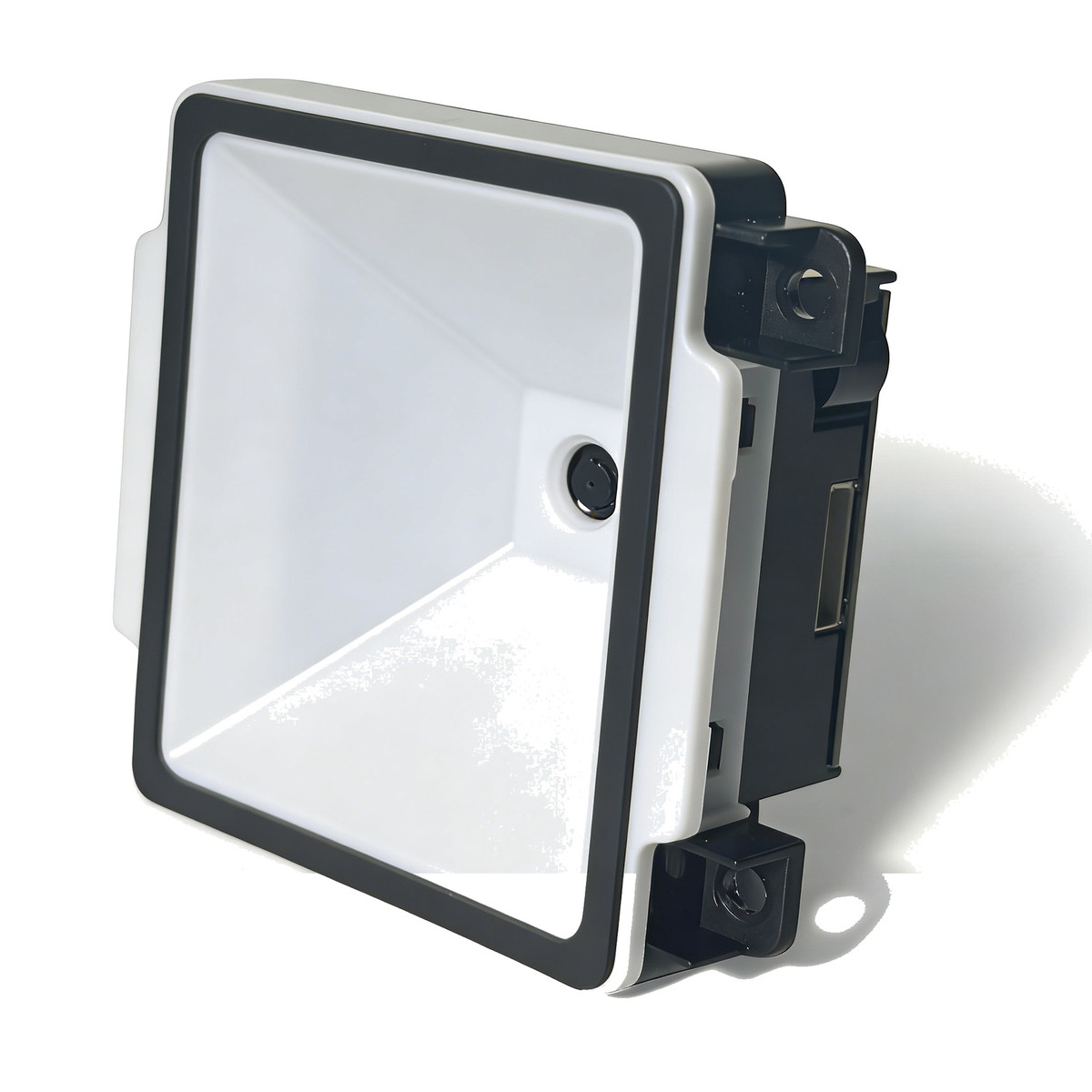 F4100Embedded barcode engine
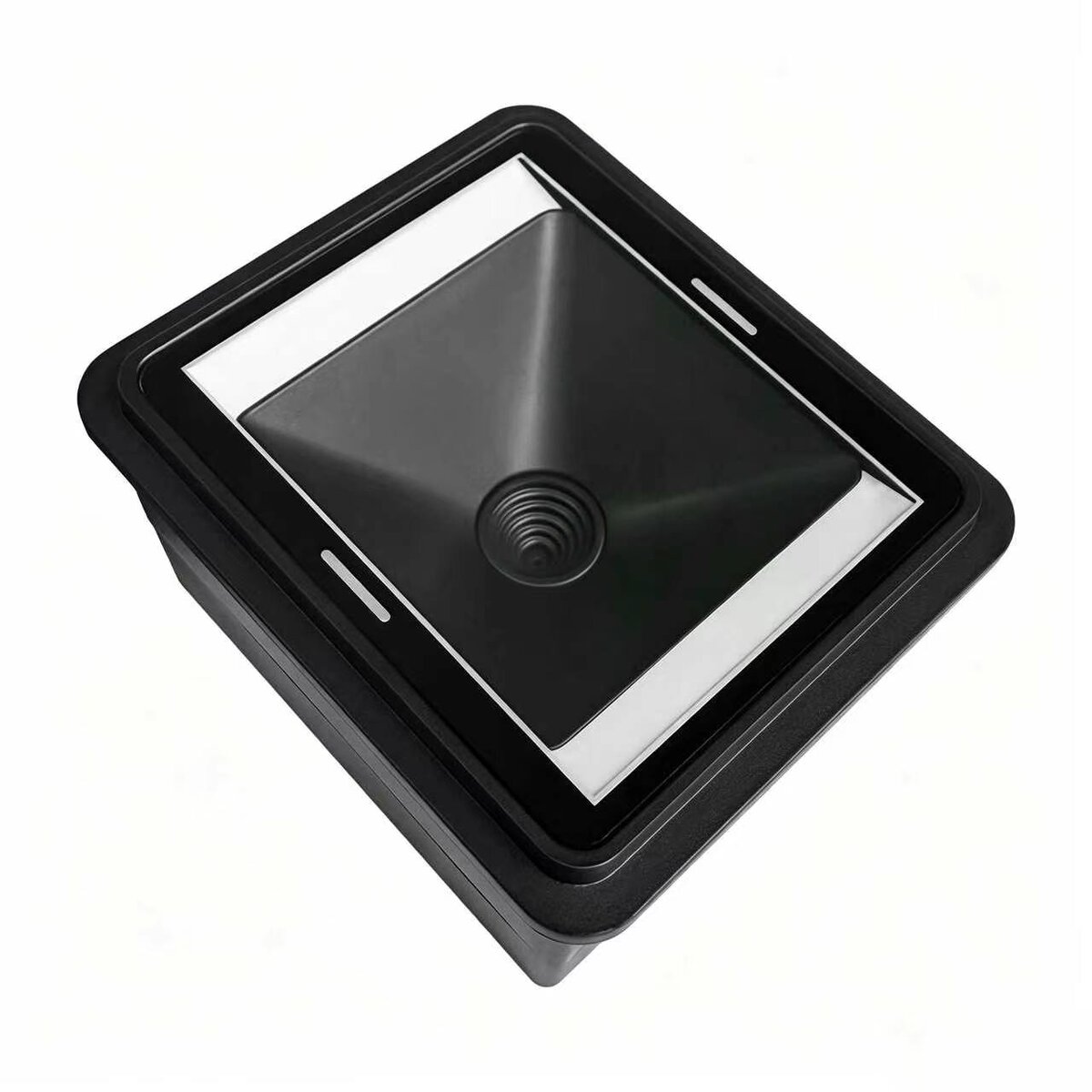 XL-F25Wide-voltage embedded engine
Related articles
- XL-M100P Module for Wearable Scanners: Hands-Free Reading for Picking and Nursing
- XL-108 OEM Barcode Engine: a 21.6 mm Ultra-Compact Reading Core for Scanner Guns and Handhelds
- How to Choose a Barcode Scan Module: A Selection Guide
📄 Download the XL-M100P brochure (PDF) | View the product page
Building a ring, neck-strap or pocket reader?
Tell us your enclosure dimensions and interface plan - samples are free for evaluation, and we can share the 13-pin pinout drawing.
📞 Contact Xinlong IoT